
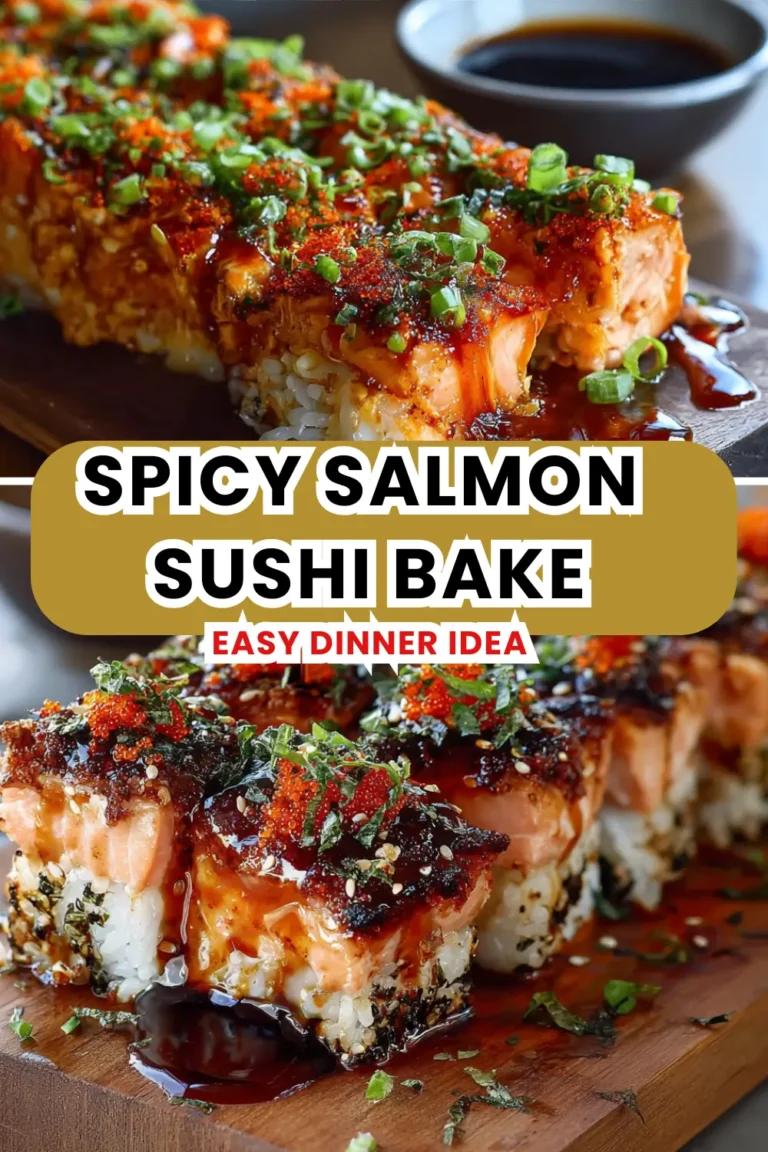
Craving sushi without the rolling hassle? This Spicy Salmon Sushi Bake is your answer! Deconstructed sushi magic with layers of seasoned rice, creamy spicy salmon, melty cheese, and all your favorite toppings baked to golden perfection. Ready in just 45 minutes with only 15 minutes of prep! Perfect for parties, potlucks, game day, or easy weeknight dinners. Serve with crispy nori sheets for an interactive dining experience everyone will love. No sushi-rolling skills required—just layer, bake, and enjoy!
Introduction
Imagine taking all the incredible flavors of your favorite spicy salmon sushi roll—the buttery salmon, the kick of sriracha, the creamy texture, the umami-rich seasonings—and transforming them into a shareable casserole that requires absolutely zero rolling expertise. That’s exactly what Spicy Salmon Sushi Bake delivers, and it’s become one of the most viral recipes on social media for very good reasons.
This deconstructed sushi dish has captured the hearts of home cooks everywhere because it makes restaurant-quality sushi accessible to everyone. No need to master the art of rolling perfect maki or worry about your rice falling apart. Instead, you simply layer seasoned sushi rice with a luxuriously creamy salmon mixture, bake until warm and bubbly, then let guests scoop their portions onto crispy nori sheets. It’s interactive, customizable, and absolutely delicious.
The beauty of this recipe extends beyond its simplicity. It’s incredibly versatile—perfect for feeding a crowd at parties, ideal for potlucks where you need something memorable, and equally wonderful for cozy family dinners. Whether you’re a sushi enthusiast looking for an easier way to enjoy your favorite flavors at home or someone who’s always been intimidated by traditional sushi-making, this baked version offers the perfect solution.
The Story Behind Sushi Bake
While traditional sushi boasts centuries of refined history in Japanese cuisine, sushi bake is a thoroughly modern innovation born from Filipino-American culinary creativity. This fusion dish first gained traction in Filipino communities in the Philippines and across North America, where home cooks sought ways to enjoy sushi flavors in a format that better suited family-style dining and celebrations.
The concept gained explosive popularity during the pandemic years when people were cooking more at home and craving creative, crowd-pleasing recipes that could be shared safely within households. Food bloggers and home cooks began sharing their versions on Instagram, TikTok, and Pinterest, and the trend quickly went viral. The genius of the dish lies in its democratic approach to sushi—it takes an art form that traditionally requires years of training and makes it accessible to anyone with a casserole dish and an oven.
The spicy salmon variation quickly rose to the top as the most popular version, perfectly capturing the widespread love for spicy salmon rolls found in sushi restaurants worldwide. Today, you’ll find countless creative variations featuring different seafood like crab, tuna, or shrimp, but the original spicy salmon version remains the gold standard for its perfectly balanced heat, creamy texture, and rich flavor profile.
What Makes This Recipe Irresistible
This isn’t just baked rice with fish—it’s a carefully crafted symphony of textures and flavors that authentically recreates the spicy salmon roll experience. The foundation starts with properly prepared sushi rice, seasoned with a sweet-tangy mixture of rice vinegar, sugar, and salt that gives it that characteristic sushi rice flavor we all love.
The star component is the spicy salmon mixture, which combines tender flaked salmon with cream cheese, Japanese mayonnaise, and sriracha to create an incredibly rich, creamy, and perfectly spicy filling. This mixture mimics the texture and flavor of the best spicy salmon rolls you’d find at high-end sushi restaurants, but it’s actually easier to make than you might think.
The addition of furikake seasoning—a Japanese condiment made from dried seaweed, sesame seeds, and other umami-rich ingredients—adds authentic depth and that distinctive sushi flavor between the layers and on top. When baked, the top develops slight browning and the cheese becomes perfectly melty, creating textural interest that elevates this beyond simple comfort food.
Finally, the interactive serving style with nori sheets turns dinner into an experience. Guests can customize their portions, add extra toppings, and fold their own hand rolls, making it perfect for casual entertaining where you want something special but not stuffy.
Essential Ingredients
For the Sushi Rice Layer
- 4 cups cooked short-grain sushi rice (approximately 1.5 cups uncooked)
- 1/4 cup rice vinegar (unseasoned)
- 2 tablespoons granulated sugar
- 1 teaspoon sea salt
For the Spicy Salmon Mixture
- 1 pound fresh salmon fillets, skin removed (or substitute 2 6-ounce cans of wild salmon)
- 1/3 cup Japanese mayonnaise (Kewpie brand preferred)
- 1/4 cup cream cheese, softened to room temperature
- 2-3 tablespoons sriracha sauce (adjust based on heat preference)
- 1-2 tablespoons soy sauce or tamari for gluten-free
- 1 teaspoon toasted sesame oil
- 2 green onions, thinly sliced
- 1/2 teaspoon garlic powder
- Salt and freshly ground black pepper to taste
For Assembly and Finishing
- 1/3 cup furikake seasoning (divided use)
- Additional Japanese mayonnaise for drizzling
- Extra sriracha for drizzling
- 2 tablespoons sesame seeds (white, black, or mixed)
- Additional sliced green onions for garnish
- Toasted nori sheets, cut into squares for serving
Optional Toppings and Garnishes
- 1 ripe avocado, sliced
- 1/2 cucumber, thinly sliced
- Eel sauce (unagi sauce) for drizzling
- Pickled ginger
- Wasabi paste
- Fresh jalapeño slices for extra heat
- Masago (fish roe) for authenticity
Step-by-Step Instructions
Prepare the Perfect Sushi Rice
Begin by cooking your short-grain sushi rice according to the package instructions. The key is using the correct water-to-rice ratio, which is typically 1.5 cups of water for every 1 cup of rice. While the rice cooks, prepare your seasoning mixture.
In a small saucepan over low heat, combine the rice vinegar, sugar, and salt. Warm the mixture gently, stirring continuously until the sugar and salt completely dissolve into the vinegar. Don’t let it boil—you just want it warm enough to dissolve the granules. This step is crucial because undissolved sugar or salt won’t distribute evenly through your rice.
Once your rice is cooked and still hot, transfer it to a large, wide bowl. Pour the warm vinegar mixture over the rice. Using a wooden spoon or rice paddle, gently fold the mixture into the rice using a cutting motion rather than stirring. This technique prevents the rice from becoming mushy while ensuring even distribution of the seasoning. Cover the bowl with a damp towel and set aside to keep warm.
Cook and Prepare the Salmon
Preheat your oven to 375°F. If you’re using fresh salmon, place the fillets on a parchment-lined baking sheet, skin-side down. Brush lightly with olive oil or avocado oil, then season with salt, pepper, and a light sprinkle of garlic powder.
Bake the salmon for 15-18 minutes, depending on thickness, until it flakes easily with a fork and reaches an internal temperature of 145°F. The salmon should be opaque throughout and have that beautiful cooked texture. Remove from the oven and let it cool for about 5 minutes.
Once cooled slightly, remove and discard the skin (it should peel off easily). Using two forks, flake the salmon into small, bite-sized pieces, checking for and removing any small bones. If you’re using canned salmon as a budget-friendly alternative, simply drain it thoroughly and flake it in a bowl—this shortcut works beautifully and saves significant time.
Create the Creamy Spicy Salmon Mixture
In a medium mixing bowl, combine your flaked salmon with the softened cream cheese. Using a fork or spatula, work the cream cheese into the salmon until well incorporated. Add the Japanese mayonnaise, sriracha, soy sauce, sesame oil, and sliced green onions.
Mix everything together thoroughly until the mixture becomes creamy, well-combined, and cohesive. The texture should be spreadable but not runny—similar to a thick dip or spread. Taste your mixture and adjust the seasoning. If you want more heat, add extra sriracha. If it needs more depth, add a splash more soy sauce. If you prefer a creamier texture, incorporate a bit more mayo or cream cheese.
Assemble Your Sushi Bake
Preheat your oven to 400°F. Prepare a 9×9-inch baking dish by lining it with parchment paper or coating it generously with cooking spray. The parchment paper makes serving easier and cleanup simpler.
Transfer your seasoned sushi rice to the prepared baking dish. Using your hands or the back of a spoon, press the rice firmly and evenly into the bottom of the dish, creating a compact, uniform layer. This compression is important—it helps the rice hold together when serving.
Sprinkle approximately 3 tablespoons of furikake seasoning evenly over the rice layer. This creates a flavor barrier between the rice and salmon while adding authentic umami taste throughout the dish.
Dollop the spicy salmon mixture over the furikake-covered rice, then use a spatula to spread it evenly to all edges. Try to create a smooth, even layer that covers the rice completely. This ensures every serving gets the perfect ratio of rice to salmon.
Bake to Golden Perfection
Place your assembled dish in the preheated oven and bake for 12-15 minutes. You’re looking for the mixture to be heated through completely and bubbling slightly around the edges. The salmon mixture should look hot and creamy.
For the best texture and visual appeal, turn on your broiler during the final 2-3 minutes of cooking. This creates beautiful golden-brown spots on the surface and adds a slight crust to the top layer. Watch carefully during broiling to prevent burning—those few minutes can quickly go from perfect to overdone.
Add the Finishing Touches
Remove your sushi bake from the oven carefully. Working quickly while it’s still hot, drizzle additional Japanese mayonnaise over the top in a decorative zigzag or crosshatch pattern. Add squiggles of sriracha for color contrast and extra heat.
Sprinkle the remaining furikake seasoning, sesame seeds, and freshly sliced green onions over the top. If you’re adding avocado slices, arrange them artfully now. You can also add a drizzle of eel sauce for that authentic sushi restaurant touch.
Pro Tips for Success
Always use authentic short-grain Japanese sushi rice—brands like Nishiki, Kokuho Rose, or Calrose work perfectly. Long-grain or jasmine rice won’t have the proper sticky texture needed for this dish. The rice needs to clump together slightly so it can be scooped onto nori sheets.
Invest in real Kewpie mayonnaise if possible. This Japanese mayo has a richer, slightly sweeter flavor and creamier texture than American mayo thanks to using only egg yolks rather than whole eggs. It makes a noticeable difference in authentic flavor.
Make sure your cream cheese is completely softened before mixing. Cold cream cheese creates lumps that won’t blend smoothly. Let it sit at room temperature for at least 30 minutes, or microwave it for 10-15 seconds to soften quickly.
For the best melting quality, buy block cheese and shred it yourself rather than using pre-shredded. Pre-shredded cheese contains anti-caking agents that prevent smooth melting.
Serving Your Sushi Bake
Toast your nori sheets if they’re not pre-toasted by holding them briefly over a gas flame or placing them in a dry skillet for just a few seconds per side. Cut them into squares approximately 3×3 inches—large enough to hold a good scoop but small enough to be manageable.
Arrange the nori squares on a large platter around your baking dish. Set out small bowls filled with extra toppings: sliced avocado, cucumber ribbons, extra sriracha, eel sauce, pickled ginger, and wasabi. This creates an interactive topping bar where guests can customize their portions.
To eat, guests scoop a portion of the hot sushi bake onto a nori square, add their preferred toppings, then fold the nori around the filling like a taco or roll it loosely. The warmth of the sushi bake slightly softens the nori, making it easier to fold and eat.
Variations and Customizations
Try different proteins like canned tuna mixed with mayo and sriracha, imitation crab (kani), cooked shrimp, or even vegetarian options like marinated tofu or hearts of palm. Each creates a completely different flavor profile while maintaining the concept.
For a lower-carb version, substitute half or all of the sushi rice with riced cauliflower. Season it the same way, and it works surprisingly well while cutting calories significantly.
Make it dairy-free by using vegan cream cheese and ensuring your mayo is egg-free. Nutritional yeast can replace some of the parmesan flavor if the original recipe includes it.
Add vegetables directly to the salmon mixture for extra nutrition—finely diced bell peppers, shredded carrots, or even corn work beautifully without changing the texture too much.
Storage and Meal Prep
Store leftovers in an airtight container in the refrigerator for up to 3 days. The flavors actually meld and improve slightly overnight, making leftovers delicious. Reheat individual portions in the microwave for 1-2 minutes, or reheat the entire dish in a 350°F oven until warmed through.
Note that the rice will continue absorbing moisture as it sits, so leftovers may be slightly drier. Add a tablespoon of water before reheating to restore moisture.
You can prep components ahead—cook the rice and salmon up to 2 days in advance, but assemble and bake just before serving for the best texture and presentation.
Conclusion
Spicy Salmon Sushi Bake proves that the best recipes often come from creative fusion and thinking beyond traditional boundaries. This dish successfully bridges the gap between impressive entertaining food and accessible home cooking, delivering restaurant-quality flavors without requiring professional skills or expensive equipment.
The combination of perfectly seasoned rice, rich and creamy spicy salmon, and authentic Japanese seasonings creates a dish that satisfies both sushi purists and casual diners alike. The interactive serving style makes it perfect for gatherings, while the simple preparation makes it realistic for busy weeknights.
Whether you’re hosting a party, need a stunning potluck contribution, or simply want to enjoy sushi flavors at home without the fuss of rolling, this Spicy Salmon Sushi Bake delivers on every level. Once you experience how easy it is to create this crowd-pleaser, it’ll become a regular feature in your recipe rotation—a true testament to the magic that happens when tradition meets innovation.